
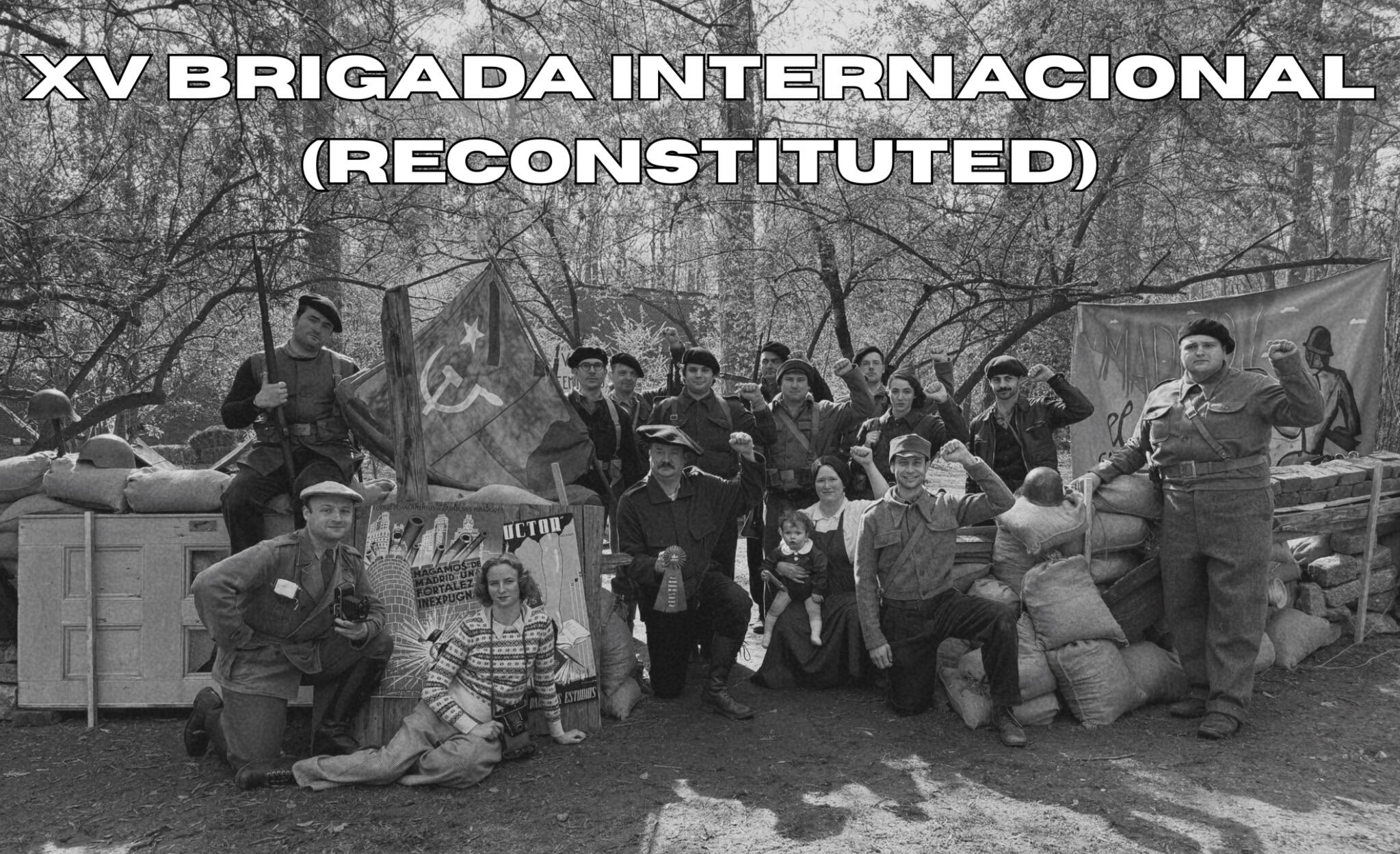
About Us
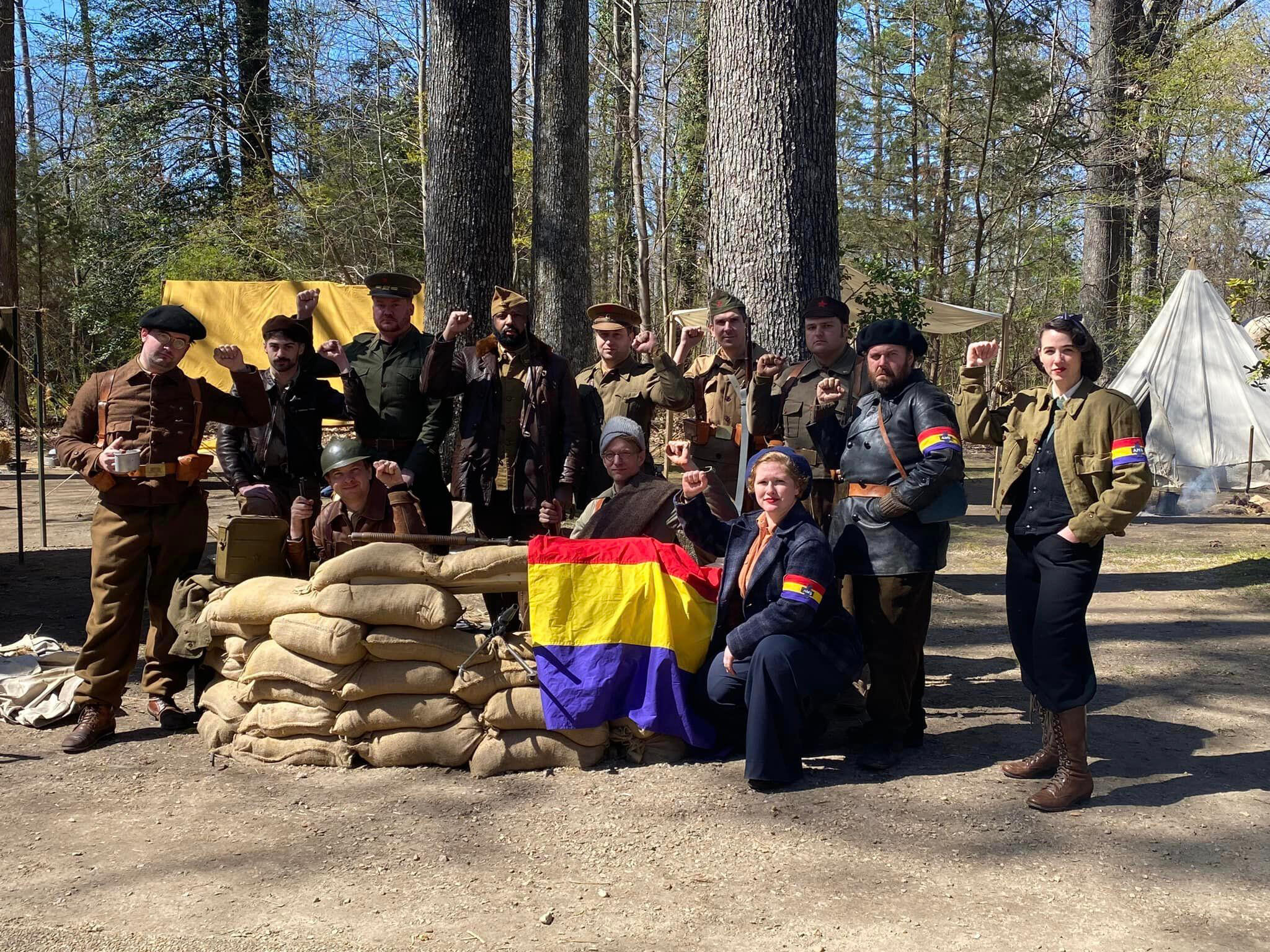
Founded in 2021, the XV Brigada Internactional (Reconstituted) is North America's premier Spanish Civil War living history organization. Drawing on a wealth of past reenacting experience, primary and secondary source research, and progressive principles, the XV Brigada strives to accurately portray the North American members of the Ejército Popular de la República (EPR) during the Spanish Civil War of 1936–1939.Since our foundation, the XV Brigada has worked with top-notch museums and historical sites across North America, including Historic Jamestown, the Independence Seaport Museum, the Military Aviation Museum, and more! With members from across the United States and Canada, our award-winning organization is dedicated to educating the public about the history of the XV Brigada and the struggle for democracy during the Spanish Civil War. We also partake in outreach and education on contemporary issues concerning liberty and democracy.We hope you will give our website a good look, follow us on Facebook and Instagram, come out and meet us in the field, and even join us in our struggle for liberty and democracy in Spain!¡VIVA LA REPÚBLICA!¡NO PASARÁN!
Leadership
Current Officers (2026)
President: Eric Urbanas
Vice-President: Mateo Erhlich
Secretary: Taylor Genovese
Treasurer: JM Barth
Safety Officer: Seán O'Brien
Civilian Officer: Esther Hodges-LeClaire
Past Officers
(2025)
President: Eric Urbanas
Vice-President: Mateo Erhlich
Secretary: Taylor Genovese
Treasurer: JM Barth
Safety Officer: Seán O'Brien
Civilian Officer: Samantha Crumb
(2024)
President: Eric Urbanas
Vice-President: Esther Hodges-LeClaire
Secretary: Taylor Genovese
Treasurer: JM Barth
Safety Officer: Seán O'Brien
Civilian Officer: Samantha Crumb
(2023)
President: Eric Urbanas
Vice-President: Mateo Erhlich
Secretary: Reid Palmer
Treasurer: JM Barth
Safety Officer: Seán O'Brien
Civilian Officer: Esther Hodges-LeClaire
(2022)
President: Mateo Erhlich
Vice-President: Eric Urbanas
Secretary: Reid Palmer
Treasurer: JM Barth
Safety Officer: Seán O'Brien
(2021)
President: Mateo Erhlich
Vice-President: Eric Urbanas
Secretary: Taylor Genovese
Treasurer: JM Barth
Safety Officer: Seán O'Brien
Unit Histories
The Abraham Lincoln Battalion
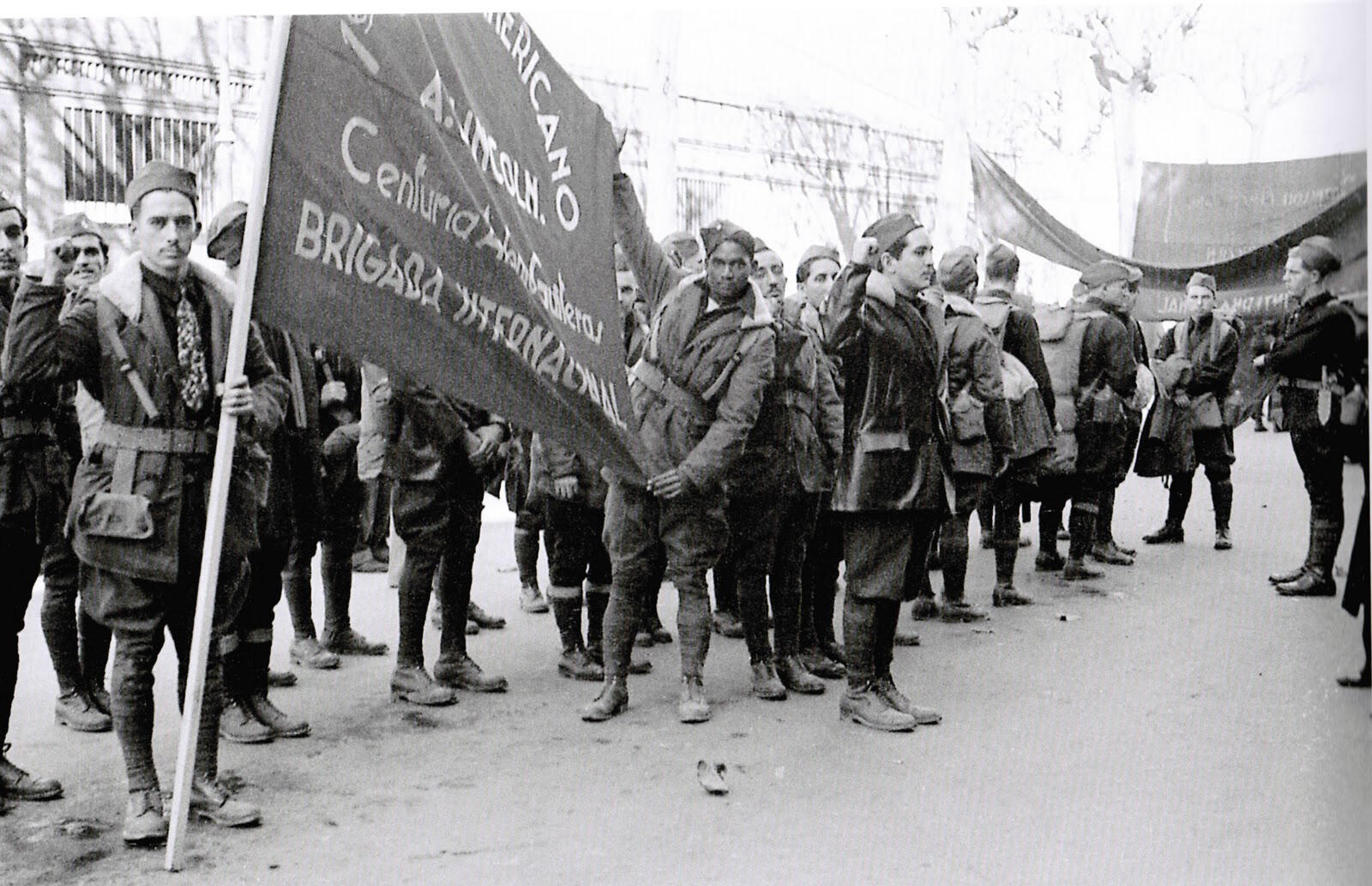
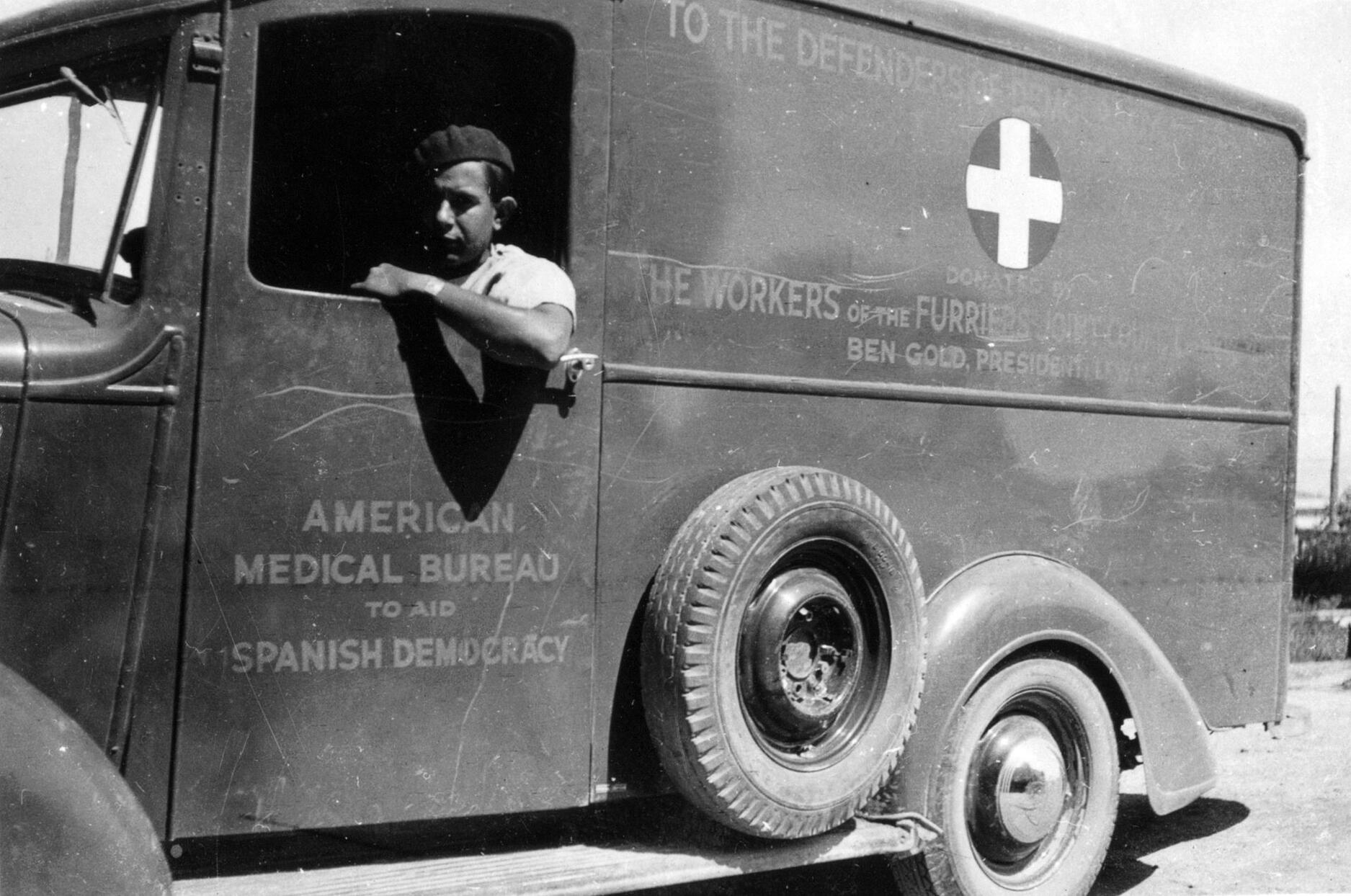
The Abraham Lincoln Battalion (ALB) was the 17th (and later the 58th) battalion of the XV International Brigade fighting for the Second Spanish Republic against the forces of General Francisco Franco and his Nationalist faction, who had military support from Fascist Italy and Nazi Germany. Around 3,000 American volunteers defied their countries laws of non-intervention and smuggled themselves into Spain in order to “make Madrid the tomb of fascism.” Over 100 American men and women also served with the American Medical Bureau as nurses, doctors, technicians, and ambulance drivers.The broader International Brigades were organized by the Communist International in 1936 in order to assist the Second Spanish Republic in their fight against Franco’s coup. The International Brigades existed for two years, from 1936–1938. The ALB was organized in January 1937 and lasted until Spanish prime minister Juan Negrín withdrew all International Brigade members in September 1938. That said, some ALB prisoners of war did not arrive back in the United States until as late as September 1939.The conviction that made volunteering for a war against fascism possible was born from the economic calamity and political turmoil of the United States during the 1930s. The young volunteers (a vast majority of the ALB were under 30 years of age) had experienced the deprivations and injustices of the Great Depression which led them to join the burgeoning student, unemployed, union, and cultural movements that were influenced by many Left organizations, including the Communist Party. Of the 3,000 American volunteers that fought in Spain, between 50–80% were members of, or were sympathetic to, the Communist Party or the Young Communist League. Many more identified with their labor unions or other Left groups. Being members of these organizations exposed the volunteers to internationalist perspectives that galvanized them to pursue conscious, political action and gave rise to their revolutionary enthusiasm. That said, not all combatants were motivated by ideological or political concerns. As Mo Fishman, a veteran of the battalion, recalled in 2006: “Some men were running away from bad marital or love situations, but what united all of us was that we hated fascism.” Anti-fascism, more than any other single factor, is what motivated and united the volunteers of the Abraham Lincoln Battalion.For the 85 African American members of the battalion, Franco’s Nationalists represented a microcosm of the injustices and oppression they faced in the United States. Although the ALB was mostly white, it was the first integrated American military unit in history. It was also the first American fighting unit to have a Black commanding officer, Oliver Law. Franco relied on Fascist Italian troops, who had recently conquered the African nation of Ethiopia, and many Fascist leaders—including Franco—believed they were fighting a war against the “Africanization” of Spain. The Black American poet Langston Hughes wrote in an article for the Baltimore Afro-American: “Give Franco a hood and he would be a member of the Ku Klux Klan.”Self-motivated and ideological, the ALB attempted to create an egalitarian “people’s army.” Officers and NCOs were distinguished only by small bars on their berets or jackets and in some cases the soldiers elected their own commanders. Traditional military protocol was often shunned, although not always successfully. The units were organized with a dual structure; each had an officer and a commissar. Although a great deal of overlap existed, the officers generally handled military affairs and tactical decisions and the commissars explained the politics of the war and tended to the volunteer’s needs and morale. After the first ALB volunteers smuggled themselves into Spain over the Pyrenees mountain range in January 1937, units received very little training before going into action at the Battle of Jarama in February 1937. Although they had fought bravely and aggressively, the ALB suffered enormous casualties—nearly two-thirds of their strength—including their notable commander Robert Merriman, who was badly wounded after an assault on Nationalist positions. The ALB remained on the frontlines—slowly building their fighting strength back up—until the summer, when they were relieved from the front prior to the offensive at Brunete.After merging with the short lived George Washington Battalion, another American fighting unit, the ALB went into action at Villanueva de la Cañada, capturing the town on the second day of the Brunete Offensive. The ALB was then deployed against Mosquito Ridge, where they were unable to repel Nationalist troops despite repeated assaults. The ALB Commander Oliver Law was killed during this action.From August to October of 1937, the ALB fought in many battles during the Aragon Offensive—showing particular valiance during the battles in Quinto and Belchite; although, as shock troops, they sustained heavy casualties. After Belchite’s gruesome house-to-house fighting, the ALB launched attacks at Fuentes de Ebro with the newly formed Canadian MacKenzie-Papineau Battalion (Mac-Paps), however they were repelled and sustained heavy casualties due to a lack of communication with the Spanish tank battalions. After Fuentes, the XV International Brigade, including the ALB, were pulled back to a reserve position for its first period of rest and relaxation since going into combat at Jarama eight months prior.In late December 1937, the ALB was mustered to participate in the recapture of the town of Teruel. The winter of 1937–1938 was among the coldest on record and many troops suffered frostbite and other ailments caused by low temperatures. The British Battalion and Mac-Paps each lost an entire company attempting to hold the territory. The ALB were pulled off the lines after three weeks of brutal fighting. However, before they could return to reserve positions, they were ordered to attack Nationalist fortifications at Segura de los Baños, which they did successfully. Despite this success, Nationalist forces did not have to transfer any forces away from Teruel and continued to hold the town.By March 1938, the ALB were in reserve positions in Aragon when they were swept up in the calamity, confusion, and devastation known as The Retreats. Franco’s Nationalist forces punched through Republican lines, driving to the sea and splitting the Spanish Republic in two. The ALB became disbursed and participated in a series of confused battles and retreats in which a majority of the battalion was killed, captured, or missing. Two high ranking American officers, Robert Merriman and Dave Doran, are presumed to have been killed—or captured and then executed—during The Retreats. The execution of all international fighters was standard operating procedure for Nationalist forces during this time. The remnants of the ALB reformed on the far side of the Ebro River, where they were slowly rebuilt from the limited number of international volunteers in reserve or those recovered from hospitals as well as from many young conscripted Spanish troops. After The Retreats, young drafted Spanish troops comprised of the majority of the XV International Brigade, including the ALB.In July of 1938, the ALB saw its final action of the war during the Ebro Offensive. The battalion re-crossed the Ebro River and rapidly advanced across the territory it had retreated from in March and April. Despite the initial success, the Nationalist forces—thanks in part to Fascist Italian and Nazi German troops, arms, and materiel—quickly rallied and pushed Republican forces back. By September, Spanish prime minister Juan Negrín, in a vain hope that the Nationalists would withdraw their German and Italian troops, agreed to withdraw all Internationals from the country.While the ALB veterans returned to the United States to much fanfare from Leftist organizations, the government of the United States felt quite differently. The U.S. government considered former members of the battalion to be security risks. FBI Director J. Edgar Hoover and President Roosevelt called the veterans “premature anti-fascists”—a moniker the veterans of the ALB took as a badge of honor. The FBI recommended that any ALB veteran who joined the armed forces during World War II be denied all military promotion or positive distinction so as to prevent communists from rising in the military. After World War II, ALB veterans were denied military enlistment and government jobs. Joseph McCarthy and the House Un-American Activities Committee blacklisted the names of all veterans of the ALB and nearly every ALB veteran has stories of being surveilled, harassed, labeled as communists, denied housing, and refused passports for decades after the Spanish War.Despite this persecution, the ALB veterans formed the Veterans of the Abraham Lincoln Brigade (which was placed on the Attorney General’s List of Subversive Organizations for decades), which met often until the 1970s. Many ALB veterans stayed in contact with each other until the end of their lives. In 1979, the Abraham Lincoln Brigade Archives was formed to record oral histories and preserve the memory of ALB veterans. The last known surviving member of the Abraham Lincoln Battalion, Delmer Berg, died on February 28, 2016 at the age of 100.–Written by collective member Taylor R. GenoveseFurther reading about the Spanish Civil War.– Bessie, Alvah. Men in Battle. San Francisco: Chandler and Sharp, 1975.
– Guttman, Alan. The Wound in the Heart: America and the Spanish Civil War. New York: Free Press, 1962.
– Hochschild, Adam. Spain in Our Hearts: Americans in the Spanish Civil War, 1936–1939. New York: Houghton Mifflin Harcourt, 2016.
– Jackson, Gabriel. The Spanish Republic and the Civil War, 1931-1939. Princeton: Princeton University Press, 1965.
– Landis, Arthur, H. The Abraham Lincoln Brigade. New York: Citadel Press, 1967.
– Rolfe, Edwin. The Lincoln Battalion. New York: Veterans of the Abraham Lincoln Brigade, 1974.
– Rosenstone, Robert. Crusade of the Left: The Lincoln Battalion in the Spanish Civil War. New York: Pegasus, 1969.
Ready To Join?
Equipment Requirements
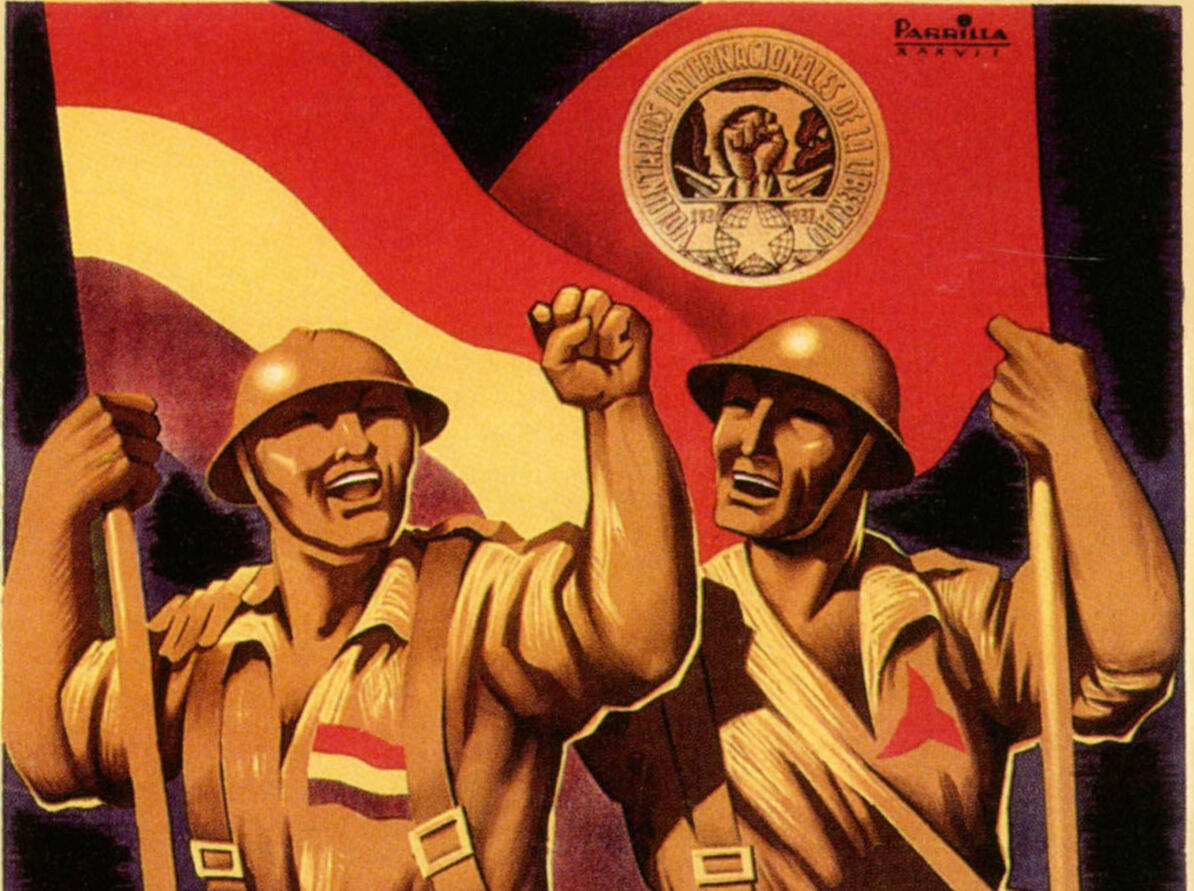
In general, reenacting/living history is an expensive hobby and the challenge of assembling an appropriate kit can be daunting. This process is made even more complex for those wishing to portray Spanish Civil War units because there are very few vendors outside of Spain that produce authentic uniforms and equipment.That said, acquiring the necessary uniform and equipment to authentically portray an ALB brigadista is about on par, cost-wise, with other 20th century military impressions.
Uniform Items
The uniforms of the XV Brigade were, perhaps ironically, not uniform throughout the war. Sometimes they were issued uniforms when they mustered into the battalion, sometimes the Communist Party of their respective country gave them an allowance to purchase equipment from Army/Navy stores before they departed for Spain, and sometimes they would get hand-me-downs.Talk to us on our Facebook group, Discord, or over email, for the names of suppliers in Spain and the U.S. We also have loaner gear to help bridge the gap while you acquire your kit.
Ready To Join?
Events
Upcoming Events
September 5–6, 2026
Military History Weekend at Lockport // Lockport, Illinois // Living History EventOctober 3–4, 2026
Warbirds Over the Beach // Virginia Beach, Virginia // Living History EventNovember 7, 2026
For Liberty in Spain! // Independence Seaport Museum // Philadelphia, Pennsylvania // Living History EventDATE TBD / December-January
Albacete 1937: XVBI School of the Soldier // Pennsylvania // Private Immersion Event
Past Events
June 12–14, 2026
Aquino Tank Weekend at the Canadian Tank Museum // Oshawa, Ontario, Canada // Living History Event


May 2–3, 2026
Across the Centuries // Fort Loudon, Pennsylvania // Living History Event


March 21–22, 2026
Military Through The Ages // Williamsburg, Virginia // Living History Event


November 22, 2025
For Liberty in Spain! // Independence Seaport Museum // Philadelphia, Pennsylvania // Living History Event
October 3–5, 2025
Warbirds Over the Beach // Virginia Beach, Virginia // Living History Event


August 30–31, 2025
Military Heritage Weekend at the Golden Age Air Museum // Bethel, Pennsylvania // Living History Event


July 25–27, 2025
Aquino Tank Weekend at the Canadian Tank Museum // Oshawa, Ontario, Canada // Living History Event


May 3–4, 2025
Across the Centuries // Fort Loudon, Pennsylvania // Living History Event


March 15–16, 2025
Military Through The Ages // Williamsburg, Virginia // Living History Event


September 28–29, 2024
Rockford World War II Days // Rockford, Illinois // Living History Event
October 5–6, 2024
Warbirds Over the Beach // Virginia Beach, Virginia // Living History Event


November 2–3, 2024
Friends of the Abraham Lincoln Battalion // Independence Seaport Museum // Philadelphia, Pennsylvania // Living History Event


March 16–17, 2024
Military Through The Ages // Williamsburg, Virginia // Living History Event


November 18, 2023
Friends of the Abraham Lincoln Battalion // Independence Seaport Museum // Philadelphia, Pennsylvania // Living History Event


September 30–October 1, 2023
Rockford World War II Days // Rockford, Illinois // Living History Event
August 11–13, 2023
Assault on Villanueva de la Cañada // Yucaipa, California // Private Immersion Event


May 20–21, 2023
Through the Ages Timeline // Fort Loudon, Pennsylvania // Living History Event


March 18–19, 2023
Military Through The Ages // Williamsburg, VA // Living History Event


March 19–20, 2022
Military Through The Ages // Williamsburg, Virginia // Living History Event


